

.svg)
.svg)


Car insurance and extended warranties both offer financial protection, but they're not the same thing. Find out how they compare and whether you need both.
Car insurance and extended warranties both offer financial protection, but they're not the same thing. Find out how they compare and whether you need both.
A cat leaps in front of you while you’re driving. You swerve and breathe a sigh of relief. Then comes the bang as your car collides with a tree trunk.
You’re driving to work. Smoke starts coming from the hood of your car. You panic, pull over, and inspect. Back at the auto shop, your mechanic informs you that it’s an electrical short.
In the first instance, you’d file a claim with your insurance provider. In the second, you’d file a warranty claim.
Why? Because insurance covers damage and liability, while warranties cover unexpected malfunctions.
No, an extended warranty (technically a vehicle service contract) is not the same as insurance. Although they are both safeguards, they have two very different focuses.
Insurance takes care of external damage, while a warranty provides protection for internal malfunctions.
These are the key differences and similarities:
Let’s break down car insurance and extended warranties in more detail, showing how they complement rather than substitute each other.
Vehicle insurance protects drivers when they incur damage from accidents or environmental events. The policy essentially safeguards the value of the vehicle.
There are different types of vehicle insurance:
There are two main kinds.
Bodily injury liability covers injuries you or a designated driver cause to someone else.
Property damage liability, on the other hand, pays for damage you cause to someone else’s property. It includes vehicles, as well as phone poles, buildings, fences, and other structures.
If you’re involved in a hit-and-run, or if the at-fault driver in an accident is uninsured, this kind of coverage offers financial protection. It also works in an instance when the driver responsible for the damage doesn’t have enough coverage to account for the total loss.
Personal injury protection makes provision for medical expenses and lost wages if you or your passengers are injured in an accident.
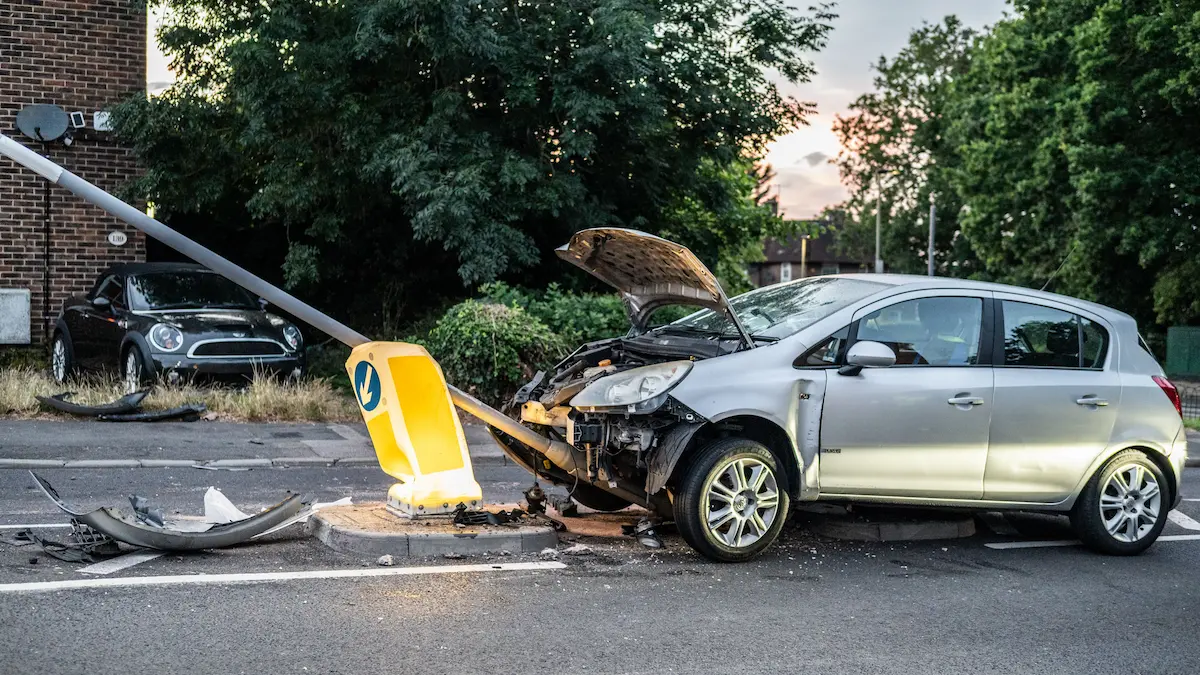
If your car is damaged in a crash, or if it flips over, collision coverage pays for the damage. You may also be able to claim for damage caused by potholes.
Comprehensive coverage makes provision for damage caused by fire, environmental events (hail, windstorms, earthquakes, floods), contact with animals, and vandalism. It also protects you against loss from theft and potentially covers broken glass.
Each state has its own requirements and minimum coverage limits.
This will vary from one state to the next. For example, in New Mexico, the minimum coverage is $25,000 per person or $50,000 per incident for bodily injury coverage. The required property damage amount is $10,000.
Compare that to Connecticut, where the minimum for bodily injury coverage is the same, but minimum property damage insurance coverage is $25,000.
There is also a difference in which types of insurance are required. Liability insurance is the most common compulsory insurance, but some states include other types.
Sticking with the same two states as an example, New Mexico only has mandatory liability coverage (property damage and bodily injury). Meanwhile, Connecticut includes that and uninsured/underinsured motorist coverage as a state requirement.
Although you have to meet the state’s minimum to register a vehicle, you can purchase collision and/or comprehensive coverage for more well-rounded protection. Banks and credit providers may even insist on it, at least until your auto loan is paid off.
When the damage results from a covered event, such as an accident or environmental event, insurance can cover vehicle repairs and replacements, injury to others, damage to someone else’s property, and medical bills.
Standard insurance typically doesn’t cover engine repairs or replacement. Insurance policies are designed for unexpected external events, rather than internal mechanical breakdowns.
Insurance also won’t cover routine maintenance or wear-and-tear items.
If you have mechanical breakdown insurance (MBI), a specialized type of coverage, then your vehicle will be covered for mechanical failures and breakdowns. If you have a standard insurance policy, then no.
MBI, also known as car repair insurance, is cheaper than an extended warranty, but there is usually a deductible. There are also limitations on which cars qualify for coverage.
In some states, the car needs to be under 15 months old and have fewer than 15,000 miles on the odometer. In others, age is capped at 36 months and mileage at 36,000 miles.
It’s also possible that only the first owner of the vehicle will be allowed to take out an MBI policy, depending on the state.
According to the National Association of Insurance Commissioners (NAIC), two processes determine the cost of vehicle insurance.
The first is underwriting, which involves insurance companies assessing the risk associated with covering you. The second is rating—that’s the pricing process. It involves assigning a price based on what the insurer believes it will cost to cover your potential claims.
Your vehicle, where you live, your driving history, and other characteristics all play a role:
Insurance rates can also go up for a few reasons:
Adding a driver to the policy can also cause a rate increase, depending on the other driver’s driving record.

As opposed to vehicle insurance, extended warranties focus on the internal components of a vehicle.
Every new car comes with a factory warranty that lasts for a set period of time and miles. Similarly to any warranty, it protects against defects or malfunctions that occurred during the manufacturing process.
The cost of a factory warranty is worked into the selling price of the car. In other words, you don’t pay for the coverage.
Once you reach the age and mileage limit, the warranty falls away. Using a free VIN tool can help you see whether your vehicle is still protected.
It is possible to extend factory coverage. It needs to be done before the factory warranty lapses, and you’ll need to work through the manufacturer or a franchised dealership.
If the factory warranty has already lapsed, you can purchase an extended warranty (which is technically a vehicle service agreement) through a third-party provider. These plans vary in coverage and are generally more customizable than manufacturer extended warranties.
Any extended coverage you take out after the original factory warranty lapses is an optional add-on, not a requirement.
The Federal Trade Commission notes that extended warranties (or service contracts, to be more accurate) differ from warranties that come with new products. In addition to costing extra, they also cover different issues than the manufacturer’s warranty.
There are valid reasons for purchasing an extended warranty, but you may decide that it’s not worth it for your particular circumstances.
If you do decide to look into coverage options, Chaiz’s comparison tool allows you to assess quotes from various providers without any pressure to purchase.
Coverage will depend on the plan.
At the most basic level, a powertrain plan will cover high-cost components like the engine and transmission.
More comprehensive bumper-to-bumper plans include air conditioning, electronics like infotainment systems, and high-tech sensors, among other components.
Because coverage is varied, it would be easier to specify what a warranty doesn’t include:
This isn’t an exhaustive list, so make sure you understand the terms of the contract if you choose to purchase an extended warranty.
MBI is similar to warranty coverage, but it’s billed through the insurance provider.
The cost of MBI can range from $30 to $120 per year, depending on state, provider, and the policy. Deductibles can range from $100 to $500. GEICO, as one example, charges a $250 deductible per claim.
Although it has a higher deductible, it is much more affordable than an extended warranty.
While an MBI is appealing, the limitations on qualifying vehicles means many vehicle owners don’t have the option. That’s where extended warranties step in. For vehicles over the threshold, service contracts fill a gap.
You can learn more about how extended warranties compare to MBI with this guide.
A few factors determine the price of an extended warranty:
Older cars with higher mileage are at greater risk of breakdowns. Much like insurance, higher risk is reflected in higher policy costs.
Basic powertrain plans are the lowest tier and more affordable. The price climbs with more extensive coverage.
Extended factory coverage costs more, and VSCs through dealerships come with high markups.
Because you’re buying directly from the provider, purchasing through Chaiz’s online marketplace can help you save up to 60% on extended coverage.
Reliable brands usually cost less to cover, whereas more expensive or less reliable brands cost more. For example, the average extended warranty for a Honda is between $700 and $1,800, whereas it’s between $3,000 and $7,500 for a BMW.
There’s a practical reason for the price difference: Luxury and European manufacturers cost more because of higher parts costs and specialized repair requirements.
The amount will vary from provider to provider. Some don’t charge a deductible at all; others charge up to $500. The most common amount is $100.

Extended warranties and car insurance aren’t an either/or situation. Unless you live in New Hampshire, car insurance is a legally mandated requirement. Purchasing extended protection for mechanical components is optional.
Insurance and warranties also play different roles. Insurance offers protection in the event of accidents, environmental damage, and other unpredictable events.
Extended warranties take the weight of unexpected repair costs off your shoulders and offer peace of mind.
Driving without a warranty mainly comes with financial risk, not legal consequences. On the flip side, driving without insurance can result in
In short, insurance is a must; an extended warranty is not.
Because it’s optional, determining whether an extended warranty is worth it for you requires careful consideration.
So, a final question:
You don’t need to have both at the same time, but the combination does offer full-spectrum coverage. Insurance provides external cover, while a service contract focuses on the internal components of the vehicle.
If you drive a certified pre-owned car or have a vehicle that’s still under factory warranty, purchasing an extended warranty can duplicate cover.
It also may not be necessary to have the extra protection if your car is a reliable make and has low mileage. If you don’t plan on keeping the car for more than a few years, it might make sense to skip it.
However, there are times when it’s advisable to have both an extended warranty and car insurance at the same time.
For example, if you have a high-mileage car, there’s a higher risk of mechanical breakdowns. Similarly, if you drive a luxury car and the factory warranty has lapsed, extended protection keeps high repair costs down.
With that said, having combined protection doesn’t mean you’ll never face maintenance expenses. There are some things that neither an insurance policy nor an extended warranty will cover:
If you stumbled onto this page confused about car warranties vs car insurance, it should now be clear that the two are complementary safeguards for vehicle owners.
One is there for unexpected events outside your control, like accidents and environmental events. The other provides a safety net when the check-engine light comes on.
But there are some car costs that you can’t avoid as an owner. Maintenance, wear-and-tear items, and gradual deterioration are normal, not defects or the result of an unexpected event.
Remembering that will help you prepare for pesky oil changes and tire rotations.

Live quotes in <10 seconds
Best-price guaranteed

5K+ customers trust us


