

.svg)
.svg)


The extended auto warranty market is growing and projected to keep growing. Find out what's driving consumer decisions to purchase extended protection.
The extended auto warranty market is growing and projected to keep growing. Find out what's driving consumer decisions to purchase extended protection.
Extended vehicle warranties are a gamble, but in 2026, more consumers are rolling the dice.
Back in 2014, a commonly cited Consumer Reports survey revealed that 55% of owners purchased extended warranties (which are technically vehicle service contracts), but never logged any claims on the policy.
Deciding whether an auto warranty was worth it was considered using a more traditional measure of ROI. Over a decade later, the landscape has shifted.
The question most Americans need to weigh up now is not whether they’ll log a claim, but whether they can afford to not be able to log a claim in the first place.
At the global level, 360iResearch notes that the extended-warranty industry is expected to continue growing at a compound annual growth rate of 6.79% over the next 6 years.
In the US, the industry as a whole (covering all industries) reached $53.01 billion in 2025, and All Shield projects that it will reach $117.02 billion by 2034. Meanwhile, according to IBISWorld, the extended auto-warranty provider industry reached $42.3 billion in revenue in 2026, reflecting a steady 0.5% annual growth.
The point is simple: The extended-warranty industry has grown and is expected to keep growing.
Research into the growth of the extended-warranty market cites several reasons for the continued annual growth.
Modern vehicles are complex, due in part to advanced driver-assistance systems, software-controlled functions, and specialized components.
All of these are costly to repair, and the increased complexity requires skilled technicians to complete the work. That means higher labor costs, more complicated diagnostics, and a greater chance of breakdowns.
In 2026, when the cost of living is already too high for many people to keep up with, there’s a significant pool of drivers who can’t afford to pay for a complicated electrical repair out of pocket.
According to IBISWorld, the aging US vehicle fleet played a role in the growth of the extended-warranty market. The average vehicle age is likely to increase to 13 years in 2026, from 12.8 years in 2025 and 12.6 years in 2024.
Passenger vehicles, in particular, are aging faster at 14.5 years. SUVs and lighter trucks, meanwhile, are slightly “younger” at 11.9 years.
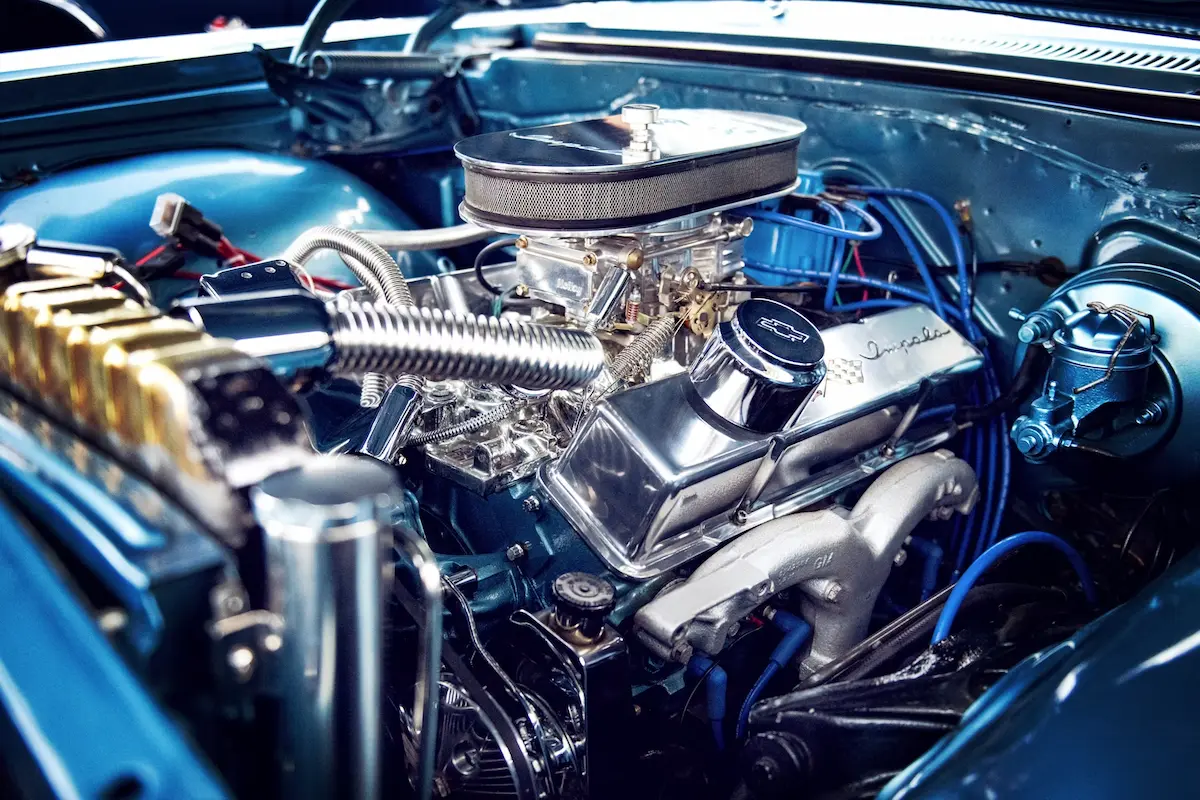
Aside from the rising cost of new cars, many vehicle owners are keeping their cars beyond the 10-year point because of high auto loans. The improved durability of vehicles has helped to facilitate longer ownership.
However, vehicles of that age are more prone to major breakdowns across all makes and models. That equals thousands of dollars in repairs for those who don’t have extended protection.
In its most recent Your Driving Costs analysis, the American Automobile Association integrated select EVs and hybrids into its standard vehicle categories. This reflects their growing share in the market.
In light of the rising age of vehicles on the road and the high cost of repairs, it makes sense that EV owners are helping to fuel the growth of the extended-warranty industry.
In contracts processed through Chaiz, we’ve seen that 73% of drivers choose to purchase Best coverage plans (the highest tier), regardless of income level. That says something noteworthy about consumers’ risk tolerance and how it’s fueling the growth of the extended-warranty industry.
Additionally, Chaiz data shows a lower cancellation rate from buyers who purchase add-ons. Of the 50% who do purchase add-ons, 18% cancel their plans, compared to 27% who cancel without purchasing add-ons.
One possible explanation for this is that consumers are serious about mitigating the risk of breakdowns because the overall cost of the warranty is less than the potential cost of a major repair and all the costs (towing, rental cars, etc.) that come with it.
There has been a shift in the way consumers think about extended protection for their vehicles. In the US, there is a real problem with spammy, scammy companies.
However, a new generation of drivers is starting to view extended vehicle protection as a tool, which tracks with consumers’ increased preference for predictability, as mentioned in a Coherent Marketing Insights report.
Globally and within the US, extended-warranty providers are integrating changes that make purchasing protection more streamlined for consumers.
Aside from digitally supported admin, providers are also able to harness modern technology to provide more specialized coverage.
AI can shape customer experience, too. In claims handling, approval, and repair status updates, AI can increase provider efficiency. Human oversight is still essential, though.
Warranty providers are also utilizing predictive analytics and usage-based data to price plans. Additionally, advanced systems can be used to tailor protection options to individual needs.
Overall, improved customer experience invites more consumers to consider purchasing protection plans.
Mordor Intelligence notes that the US automotive service market size is estimated at $199.38 billion as of 2025, but it has a problem. From 2019 to 2025, there was a 43.6% increase in the cost of vehicle repairs, according to data from the Bureau of Labor Statistics.
A significant contributor is the labor shortage, which is increasing the labor rate on repairs, as well as extending wait times for work to be completed. In highly specialized fields, this can push already steep repair costs even higher.
This presents a compelling case for owners of luxury and high-end vehicles to purchase extended protection.
New vehicles simply aren’t affordable for many Americans. Inflation, supply disruptions, high interest rates, and elevated prices have led more drivers to either hang on to their vehicles for longer or look into used cars.
Depending on the age and mileage at which those used cars were purchased, they may not have factory protection anymore. That means a larger number of drivers will have to turn to third-party providers for extended protection.
In its 2026 ownership-cost report, the American Automobile Association stated that the average annual cost of owning and operating a new vehicle is $12,863, up from $11,577 in 2025. That comes to $1,071.92 per month.

The economic landscape trickles down into pretty much every aspect of car ownership, from less gas for your dollar to higher repair costs. It doesn’t help that there was a 31.8% increase in gas prices compared to 2025, or that inflation is currently sitting at 3.4%.
The AAA identifies depreciation as the single biggest ownership cost. Vehicles are currently losing a weighted average of $4,422 per year, and EVs may be hit harder by depreciation than gas models.
Some variables that influence ownership costs:
The higher cost of ownership can influence how consumers view extended protection. The percentage of claims can easily become secondary to the potential out-of-pocket cost for a transmission replacement.
ConsumerAffairs reported that 47% of vehicle owners have extended warranties on their cars; however, only 10% have ever used them. In the same article, it’s noted that 58% of Americans say they wouldn’t be able to afford an unexpected repair bill.
That illustrates the crux of the purchase-or-not-purchase dilemma.
If you buy an extended warranty, there is a risk that you’ll never use it and be out $1,200+. If you don’t buy the extended warranty and your car breaks down, you could be facing thousands in repair bills, plus towing and other costs.
The reality for drivers living paycheck to paycheck is that a repair bill can put them behind on other bills. If you’re already dependent on your vehicle to earn a living, $90–$140 a month might be worth the risk.
A Subaru Forester owner and a Subaru Crosstrek owner may have completely different experiences. One could save themselves $9,000 in vehicle repairs by claiming on their extended warranty; the other may never use it.
According to CDK Global, extended warranties moved from a 39% to 58% purchase rate, but that number was 61% among Gen Z buyers. Additionally, 52% selected prepaid maintenance as well.
Surveys have also shown that Gen Z approaches vehicle purchases differently than older generations, purchasing six or more F&I products at a 2:1 ratio compared to other generations.
Gen Z’s higher adoption rate is likely due to risk aversion, not more overt trust in dealerships or third-party providers.

Knowing who to trust is an important part of the equation. The US auto-warranty industry and its market may be growing, but its reputation is still recovering. Years of telemarketing harassment, spam, and scams have created distrust, and there are bad extended-warranty companies to watch out for.
With that said, the right plan from the right provider could be a financial lifesaver when you really need it.
If your car is still under factory warranty, you can contact an authorized dealership about extending coverage. You can use a VIN-based lookup to check if your vehicle is still eligible.
If the factory coverage has lapsed, you can use a quote-comparison tool to look for a plan that meets your needs.
Yes, the market is growing, but extended car warranties are still a cost many vehicle owners would rather avoid. After all, dealership markups can exceed 200%, and plans typically range from $1,800 to $3,500.
So, what’s the alternative if you decide that an extended auto warranty isn’t right for you?
Consumer Reports suggests skipping an extended warranty and instead being decisive about the model you buy. They advise looking for a car with above-average predicted reliability and then properly maintaining it.
A second piece of advice that comes up often is to open a savings account and avoid the extended warranty.
The primary benefit of this risk-aversion strategy is that, unless your car actually needs repairs, you’re not losing money. It’s definitely a cost-effective strategy, but it’s not always the best option if you don’t have a steady income stream or the self-discipline to put money away every month.
The DIY auto parts market hit $84 billion in 2025, according to the Auto Care Association, and there are now over 26 million DIY automotive enthusiasts in the US.
Instead of paying the high cost of repairs, an increasing number of drivers are turning to YouTube and other self-help resources to carry out repairs on their own vehicles. Basic service tasks like oil changes and filter replacements are common and can be done even with a warranty.
Some jobs require specialized training and tools, though. It’s not advisable to complete complex electrical diagnostics, internal engine work, and structural body repairs alone.
Because there are limits on how much most DIYers can do alone, this strategy doesn’t override the potential value of an extended warranty.
Not always. But when they do, they can be a financial saving grace. That’s the gamble, and the numbers say that drivers are willing to take the risk.
The extended-warranty market is also shifting and adapting. AI is making claims processes easier, while Gen Z’s purchasing habits are gaining influence as their market share increases.
Along with these transitions, there is still a need for industry leaders to simplify policy language, be clearer about exclusions, and provide clearer explanations of claim eligibility before consumers purchase.
Overall, there is no concrete answer to the question of whether extended auto warranties are worth it. But it is safe to say that the current economy is putting pressure on consumers to protect their vehicles, and extended warranties are one resource for doing so.

Live quotes in <10 seconds
Best-price guaranteed

5K+ customers trust us


